


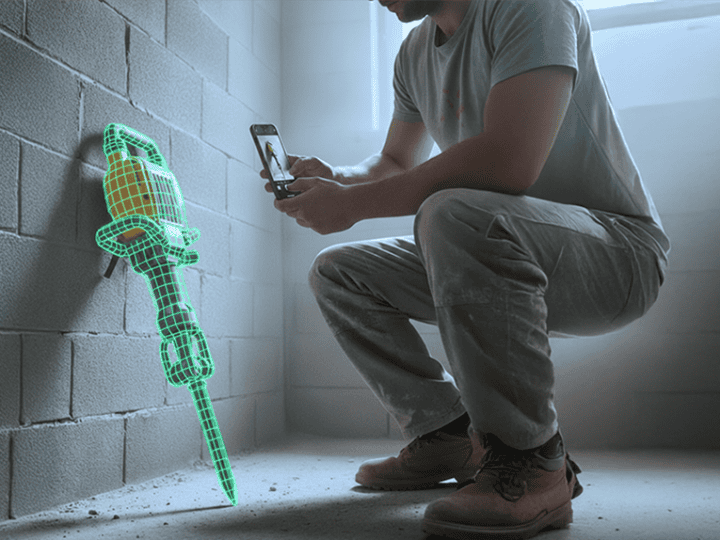
Protecting equipment was rarely a structured practice a decade ago.
Teams used to rely on trust and informal records, as they believed they
knew what tools they had and who was using them. But rising theft is
making these beliefs obsolete. Tool tracking has now become a
necessity. Every missing piece of equipment affects the project
timeline, budget, and site security.
Construction tools are often left on-site after work. Thieves can easily
access them with little or no risk. Sites with no proper tool tracking and
logs in place are vulnerable to theft and tool loss. Proper logging tools
help prevent tool losses through clear ownership records, real-time
visibility, and more. They flag unusual activity, such as tool movement
after working hours or being in a location other than the sites.
What Is Tool Tracking and Why Does It Matter
Tool tracking manages the entire lifecycle of tools by recording,
monitoring, and managing them. They do more than simple listing.
Effective tool trackers help managers know where the tools are, where
they were last moved, and the last person who used them. They use
systems, such as QR codes and RFID tags, to track equipment.
Tracking is critical for construction and field-based work, where tools
are often shared and transported between sites. When there is no
proper system in place, even expensive tools can disappear without
anyone noticing. Equipment tracking removes this uncertainty. They
turn physical assets into digital resources that can be tracked, located,
and protected.
Why Tool Theft Is a Growing Problem on Jobsites
High-value, easily accessible equipment, the unsafe nature of jobsites,
and the low penalties involved with tool theft have contributed to the
growing theft on jobsites. Tools are expensive, and there is a high
demand for second-hand tools in online marketplaces and car boot
sales. Thieves can easily sell them on online platforms or in local
markets with little or no risk and earn instant cash.
Construction sites are left unattended on nights, weekends, and
holidays. They have minimal security measures, such as fencing and
CCTV surveillance. Thieves pose as workers, walk into the jobsite, and
get access to tools without any difficulty.
Tool theft is considered a low-risk crime, as thieves seldom get caught,
and even if they do, penalties are minimal. Lack of a standardised
registration or identification system of tools makes it harder for the
authorities to trace them and return them to their rightful owner.
Many times, tool theft is not reported because the process is
time-consuming and recovery rates are low. Distorted official figures
reduce the true scale of the problem among the authorities.
How Poor Equipment Logs Lead to Tool Loss?
Poor equipment logs create inaccurate data, resulting in misplacement,
lack of accountability, and increased risk of theft. When logs are not
updated, tools do not match their physical location. Teams waste time
searching for the equipment and eventually assume that the tool is lost.
Without proper logs, it is difficult to determine who last used a specific
tool. Precise documentation establishes clear responsibility and
encourages employees to return the tool after use. In the absence of
proper equipment logs, it is hard to determine whether the tool is
misplaced or stolen. This facilitates both internal and external theft.
Tools have a certain lifetime. They break or malfunction due to regular
use. Inaccurate records make it difficult to track when a tool was
purchased and when it’s due for maintenance. Keeping the faulty tool
in circulation increases the risk of accidents, downtime, and costly
replacements. Damaged tools are often forgotten and contribute to tool
loss.
Tool Tracking vs Manual Equipment Tracking
Manual equipment tracking relies on spreadsheets, paper logbooks,
and verbal handbooks. These are slow, inconsistent, and easy to forget
methods. People often delayed or skipped entries, leading to outdated
records. When a tool goes missing, there is no reliable way to determine
its last owner.
Digital tracking tools are not like manual equipment tracking. Tools are
unlocked only when they are scanned, ensuring every entry is
registered. Managers can see who has what and where the tool is.
Digital tracking controls each step of the tool movement.
● Tools are logged at the point of issue
● Returns are enforced
● Location updates happen in real time
● Managers can review activity daily
How Better Tool Tracking Improves Jobsite Security
Better tool tracking improves jobsite security by providing real-time
visibility, enabling geofencing and alerts, and promoting a culture of
accountability. These measures act as a strong deterrent to theft and
unauthorized use and facilitate the recovery of stolen assets.
Modern digital tracking tools are equipped with technologies such as
RFID and GPS. Unlike manual tracking, they remove the data chaos and
enable managers to always know where the tools are and locate them
in case of theft.
On the jobsite and in specific storage areas, managers can set up
geographic boundaries. If an asset crosses this perimeter after
working hours or without authority, alerts are sent to the site manager
or the person responsible.
Tracking tools come with features such as scan to unlock, which
prevent unauthorised people from accessing the tools. Individuals can
also disable the tools remotely if they are missing or lost.
Equipment Tracking Best Practices for Construction Tools
Effective tracking does not require complexity. It requires consistency.
The most successful systems follow clear principles that make logging
natural, reliable, and impossible to ignore.
● Use a Single System
Avoid parallel methods such as paper sheets, spreadsheets, and
separate apps. One digital platform should handle all equipment logs
across the organisation.
● Assign Unique IDs to Every Tool
Each item must be clearly identifiable, even if two drills or saws look
identical. Unique IDs remove ambiguity and ensure every movement is
traceable.
● Make Logging Part of the Workflow
Logging should happen automatically at the moment of issue, transfer,
or return—without exception. If tools are moved, it must be recorded.
● Reduce Friction
The process should be simple: scan, confirm, done. If it feels slow or
complicated, people will bypass it.
● Enforce “No Scan, No Tool.”
Tools should not be accessible unless they are logged in. This removes
choice from the process and ensures accountability by design.
● Train Everyone the Same Way
Onboarding should include hands-on demonstrations, not just
explanations. Every worker must understand how to log tools and why it
matters.
● Review Logs Regularly
Managers must review tracking data and act on gaps. The system loses
credibility when irregularities are ignored.
Final Thoughts
Tool theft is not inevitable. It thrives in environments where tools are
invisible and responsibility is unclear. Better tracking tools change that.
By replacing fragile manual equipment logs with real-time digital
systems, construction businesses gain control over their assets with KYNEKT.ID.
With the right approach, tool tracking becomes invisible, working
quietly in the background while your sites run efficiently and securely