


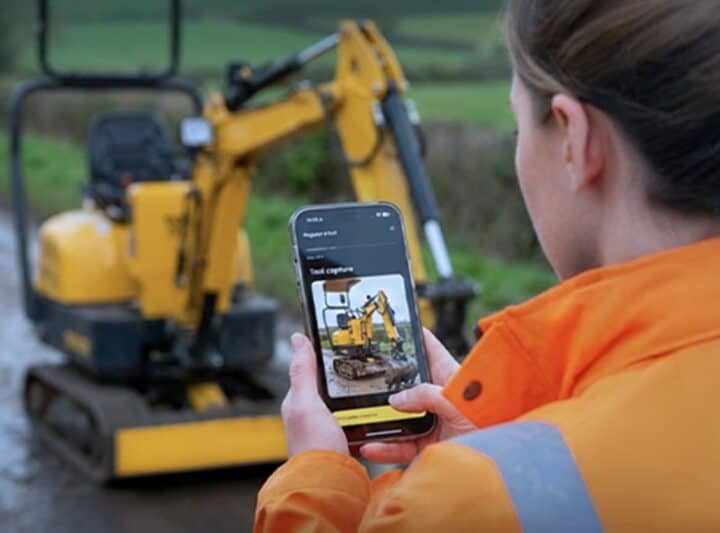
In 2026, high-performing jobsites are not defined solely by the quality of the build but by how efficiently assets and data are managed on-site. Modern tools are fast-moving, and assets are heavily shared between teams and sites. often without wasting time. Still, hours disappear every week. Teams pause their work in between to find tools. Work is delayed because the right tool is on another site or has been stolen. Digital Tool Logging becomes critical on jobsites because time is money
Poor logging slowly turns small interruptions into daily habits. For teams, searching, borrowing, and reordering become normal. However, digital Logging can change this pattern. They provide a clear record of tools that eliminate guesswork with certainty. Digital logging tracks the movement of the equipment, enabling the team to know where the tools are and who is using them, increasing productivity and saving time.
What Is Tool Logging and Why Jobsites Struggle Without It
Tool logging is the process of real-time documentation of tools. Living records of equipment, such as who has it and who last had it, are created in a digital logging system. Many sites, in theory, use “log” tools such as spreadsheets or verbal handovers for tool documentation
In practice, these methods rarely work. Verbal handovers are forgotten after the shift is over. Spreadsheets are rarely updated when tools move between sites and floors. Without a reliable logging tool, tools become invisible. The manager no longer knows which tools are available at the site and which are not. Crews often struggle to find tools when they are needed the most. And eventually, the whole site operates on assumptions rather than data.
The Real Impact of Poor Tool Logging on Jobsite Productivity
Poor logging silently reduces productivity on jobsites. Teams spend valuable time searching, waiting, and borrowing the tools when proper logging is not in place. Teams hoard tools without even knowing it, duplicate purchases are made, and daily tasks are delayed because of the unavailability of the right equipment.
Poor logging destroys the trust between people and teams. Crews stop reporting missing tools to managers because they know they always go missing. What begins as a simple record-keeping error soon turns into an operational weakness. This eventually decreases the job site’s efficiency, and delayed work becomes a habit.
● Crews waste time searching
● Tasks are delayed because the correct tool is unavailable
● Supervisors are interrupted to resolve equipment issues
● Duplicate tools are purchased
● Work is rescheduled around missing equipment
How Digital Tool Logging Improves Tool Management
Digital tool logging transforms tool management by turning guesswork into a data-led process. Tools are registered with unique serial numbers, allowing managers to see what they have and where they are. They remove uncertainty and prevent the daily interruptions in work due to missing equipment.
Logging tools update the records in real time. Every tool is logged when issued, transferred, and returned. Teams can see who is using the tools currently and where they are located. Tool tracking enhances visibility and saves the time that would otherwise be spent searching for the tool.
Digital logging fosters accountability. When every team member knows that every movement of the tools is recorded, they are less likely to be mishandled or forgotten. People on the job site become more responsible, and operations do not stall because of a missing tool. Furthermore, managers, instead of reacting to problems, efficiently allocate resources and complete the project on time.
How Better Tool Logging Keeps Jobsite Tools Organised
Better equipment logging introduces structure into the chaotic environment of the jobsite. Teams no longer need to rely on verbal handovers or memory to know who is responsible for the tool. With digital logs, tools don’t disappear. Supervisors know what is on-site and what is handed over to other teams on different sites. Storage areas become easy to manage as duplicate purchases are eliminated and not made.
Over time, digital tools help in creating a culture of accountability on the jobsite. As responsibility is clear, tools are returned. Stolen or missing items are flagged, which enables managers to act early on. The jobsite becomes more efficient and organised with the introduction of a better logging tool.
Digital tool logging keeps jobsite tools organised by:
● Assigning tools to specific sites or teams
● Preventing tools from drifting between locations
● Highlighting overdue returns
● Showing availability before work starts
● Creating accountability for every item
How Tool Logging Reduces Delays and Rework
Delays rarely start with a major failure. Small disruptions are responsible for it:
a carpenter searching for a drill, a supervisor sending someone to another site to collect a cutter, or a tester. All these interruptions seem small in isolation, but in a week or a month, they add up to hours of lost productivity
Digital tool logging removes uncertainty. Before a task begins, supervisors can confirm that the required tools are available. If something is missing, it is identified early, while there is still time to respond. Work continues without interruption, and teams are not left waiting. This proactive control turns potential delays in planned decisions, keeping projects on track.
● Last-minute work stoppages
● Improvised methods
● Rework caused by poor tools
● Conflicts between teams
● End-of-day overruns
Turning Tool Logging Into a Scalable Tool
Management System
As businesses grow, job sites multiply, and teams expand, manual processes struggle to keep pace and quickly lose effectiveness. Digital systems centralise tool data within a single, structured framework. Tools follow the same lifecycle. It does not matter whether a tool is used by five people or fifty. They move through the same, clearly defined process.
With structured data in place, contractors can standardise how tools are added, issued, transferred, and returned. Managers gain full visibility across projects, enabling smarter allocation, fewer duplicate purchases, and better planning based on real usage patterns rather than assumptions.
Scalability is ultimately about consistency. New sites, crews, or subcontractors can be onboarded without reinventing processes. The same rules, permissions, and workflows apply everywhere. Over time, equipment logging evolves from a basic record-keeping task into a fully integrated tool management system withKYNEKT.ID.
Final Thoughts
Chaos on a jobsite rarely comes from poor planning. It comes from uncertainty. When tools are invisible, work slows. When equipment is unpredictable, progress suffers. Digital logging replaces that uncertainty with control. It saves time not by working faster, but by removing the need to stop.
Every week, those saved minutes add up. Over a year, they transform how a site operates. Tool logging is no longer an administrative task. It is a foundation for modern jobsite productivity.