



When people talk about tool theft, the conversation usually begins and ends with one number. The price of the stolen tools. A van might lose £2,000 worth of equipment. A construction site might lose £5,000 in tools. Insurance companies often report national figures running into tens of millions of pounds each year.
Yet for the tradespeople who experience these thefts, the real cost goes far beyond the replacement value of the equipment.
Tools represent the ability to work. They are the core infrastructure of a trade business. When they disappear, the immediate financial loss is only the beginning. Work stops. Projects fall behind schedule. Customers lose confidence. Stress spreads across families and businesses.
Understanding the wider impact of tool theft reveals why prevention and preparation matter far more than reacting after the damage has already occurred.
When Tools Are Stolen, Work Stops
Most tradespeople operate with a single working set of equipment. Tools build up over years of investment. A plumber relies on pipe tools and diagnostic equipment. An electrician depends on specialised testers. A carpenter builds a kit of saws and precision equipment that allows them to work efficiently.
When those tools vanish overnight, work often stops immediately.
Imagine arriving at a van in the morning and discovering the doors have been forced open. The tools that supported the day’s work are gone. Projects scheduled for that day cannot begin. Customers must be contacted and informed that the work cannot proceed.
Some customers understand. Others simply move on to another contractor.
Research across the trades sector shows that tool theft frequently causes operational disruption.
Impact of Tool Theft on Business Operations
| Impact Area | Typical Outcome | Source |
| Average days unable to work after tool theft | 3 to 7 days | Federation of Master Builders |
| Tradespeople forced to cancel booked work | 62 percent | Direct Line Business survey |
| Projects delayed due to tool theft | 71 percent | Checkatrade industry research |
| Tradespeople losing repeat clients after cancellations | 23 percent | Construction marketing surveys |
| Tradespeople forced to use loans or credit to replace tools | 16 percent | Direct Line Business |
Sources
Federation of Master Builders [1]
Direct Line Business research [2]
Checkatrade industry data [3]
Even a few days without tools can create weeks of disruption, particularly during busy periods when tradespeople are fully booked.
Reputation Can Be Damaged in a Single Day
For many tradespeople, reputation is the foundation of their business. Word of mouth recommendations generate new work. Positive online reviews help attract new customers. Trust builds gradually as projects are completed successfully.
Tool theft interrupts this process.
When a job must be cancelled because tools have been stolen, the client may not fully understand the circumstances. From their perspective the contractor failed to turn up.
Online review platforms amplify these moments. One negative review about a cancelled booking can remain visible for years. Prospective customers reading that review may decide to contact another contractor instead.
For businesses that depend heavily on local reputation, the long term impact of a single cancelled job can be significant.
This reputational damage rarely appears in the financial estimates of tool theft, yet it often becomes one of the most costly consequences.
The Pressure to Replace Tools Quickly
Once tools are stolen, tradespeople face immediate pressure to replace them.

Projects cannot wait indefinitely. Clients expect work to resume quickly. Contractors often need to purchase replacement equipment within days. A full set of professional tools can cost thousands of pounds. Battery systems, specialist diagnostic tools, and precision equipment represent major investments.
Without savings available, some tradespeople rely on credit or short term loans to rebuild their toolkit.
Insurance claims may eventually help cover the cost, but insurers typically require proof of ownership before approving payouts. This includes receipts, serial numbers, and photographic evidence of the equipment.
Tradespeople who do not have these records may face delays in receiving compensation.
The Hidden Stress of Tool Theft
The financial loss of tools often receives most of the attention. Yet many tradespeople describe the emotional impact as the most difficult part of the experience.
After a theft occurs, the sense of security surrounding tools disappears.
Tradespeople begin questioning where equipment is stored and how vulnerable it might be. A van parked outside the house may suddenly feel like a target. Tools left on site overnight may cause anxiety.
Families often feel the impact as well. A van full of tools parked outside a home can attract criminals. Knowing that equipment might draw attention to the property can create stress for partners and children.
Industry surveys show that the psychological effects of tool theft are widespread.
Non-Financial Consequences of Tool Theft
| Impact | Reported Experience |
| Tradespeople feeling unsafe storing tools at home | 48% |
| Tradespeople installing additional home security after theft | 35% |
| Tradespeople reporting stress or anxiety after theft | 41% |
| Tradespeople considering storing tools off-site permanently | 29% |
| Tradespeople worried about confronting thieves | 22% |
Sources
Construction industry surveys and insurance research [2] [4]
These figures highlight a reality often overlooked in discussions about tool theft. The stress and disruption can continue long after the equipment has been replaced.
Security Costs Add Up Quickly
Many tradespeople respond to theft by improving their security.
High security van locks become common upgrades. CCTV systems and motion detection lights are installed at home. Tool vaults are added to vehicles to protect equipment overnight.
These upgrades provide additional protection, but they also introduce new costs.
Tradespeople who experience theft often spend hundreds or even thousands of pounds improving their security systems. While these measures reduce risk, they do not solve the underlying issue.
Without proper documentation and identification, stolen tools remain difficult to recover.
Why Proof of Ownership Matters
When police recover tools during investigations, they must identify who the equipment belongs to. Without documentation linking the tools to a specific owner, returning them becomes extremely difficult.
Insurance companies face the same challenge when evaluating claims.
This is why many insurers recommend that tradespeople maintain detailed records of their equipment. Serial numbers, photographs, receipts, and purchase details help prove ownership.
Creating these records manually can be time consuming and difficult to maintain.
Digital asset management platforms provide a more practical solution.
The Role of KYNEKT in Tool Protection
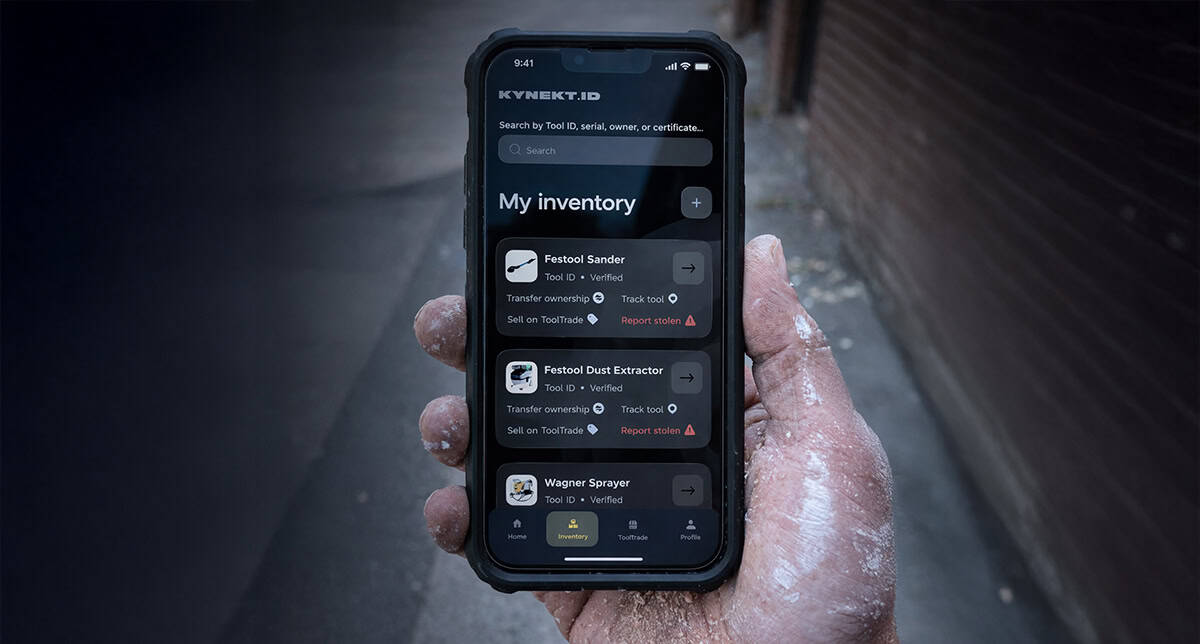
The KYNEKT platform was designed to help tradespeople manage and protect their equipment through a digital ecosystem.
Instead of relying on paper lists or spreadsheets, tradespeople can register tools directly through the KYNEKT mobile app. Each tool can be recorded with detailed information including serial numbers, photographs, purchase dates, and values.
This creates a structured digital inventory that provides immediate proof of ownership.
If tools are stolen, the owner can access accurate records instantly when dealing with police or insurance companies.
More information about the platform can be found at
https://kynekt.mywebsi.co.uk
Asset Identification with KYNEKT ID
Another key element of the KYNEKT ecosystem is KYNEKT ID, a system that allows physical tools to be linked directly to digital ownership records.
Identification tags attached to tools provide visible proof of ownership and connect the equipment to its digital record.
This reduces the likelihood that stolen tools can be resold easily and helps authorities identify equipment if it is recovered.
Asset identification transforms tools from anonymous equipment into traceable assets.

Tracking and Control Through K|TRAK
The KYNEKT ecosystem also includes K|TRAK, a system that introduces tracking and remote disablement capability for compatible tools and machinery.
Remote immobilisation technology is widely used in industries such as fleet management and equipment rental to prevent theft and unauthorised use [5].
Applying this technology to trade tools gives owners a new level of control over their equipment.
If tools are stolen, the owner can track their movement and take action immediately. This reduces the value of stolen tools and improves the chances of recovery.
Peace of Mind for Tradespeople
For many tradespeople, the greatest benefit of proper tool protection is peace of mind. Knowing tools sit registered, documented, and identifiable removes uncertainty around theft. If equipment goes missing, the owner holds the information needed to respond quickly. Instead of relying on memory or guesswork, a clear record of assets exists. This confidence keeps focus on the job rather than constant worry about tool security.
- Tools registered and documented
- Equipment identifiable if stolen
- Clear records support faster response when tools go missing
- No reliance on memory or rough spreadsheets
- More focus on work instead of tool security concerns
Protecting More Than Tools
The true cost of tool theft extends far beyond the price of replacement equipment.
Lost income, cancelled projects, damaged reputation, and emotional stress all follow a single break-in. For tradespeople whose livelihoods depend on their tools, these consequences can be severe.
Preventing these problems begins with preparation.
Documenting tools, attaching identification, and creating a digital inventory provides a strong foundation for protection.
Tradespeople who want to protect their tools and their business can begin by downloading the KYNEKT mobile app and registering their equipment.
Sources and References
[1] Federation of Master Builders – Industry Research
https://www.fmb.org.uk
[2] Direct Line Business – Tool Theft Annual Report
https://www.directlineforbusiness.co.uk/tradesperson-insurance/tradesperson-knowledge-centre/news/tool-theft-direct-line-annual-report
[3] Checkatrade – Construction Industry Research
https://www.checkatrade.com/blog
[4] Kingsbridge Insurance – Tool Theft in the Trades
https://www.kingsbridge.co.uk/blog/trades/trades-life/theft-of-tools-of-trade-bill
[5] Digital Matter – Remote Vehicle Immobilizer System Explained
https://www.digitalmatter.com/blog/remote-vehicle-immobilizer-system