



Tool theft has become one of the most frustrating problems facing tradespeople. Vans are broken into overnight. Construction sites lose equipment during weekends. Expensive tools disappear from shared workspaces without explanation. In most cases, once the tools are gone, they are gone for good.
For years the construction industry has responded to this problem with physical security. Stronger van locks, CCTV cameras, alarms, and secure storage systems have become common. These solutions help reduce risk, yet they only address part of the problem. They protect tools while they are locked away. The moment equipment leaves that protected environment, control disappears.
Other industries solved this problem years ago by adopting technology that allows assets to be tracked and disabled remotely. Fleet operators, rental companies, and equipment manufacturers rely on systems that monitor equipment in real time and shut it down if it is stolen or used without permission. These technologies dramatically reduce the value of stolen equipment and discourage theft before it happens [1].
Until recently, this level of control has not existed for everyday trade tools.
The introduction of K | TRAK from KYNEKT changes that. By combining real time tracking with remote disablement capability, tools become traceable digital assets rather than anonymous equipment that disappears once stolen.
Understanding how this system works explains why remote disablement has the potential to stop tool theft at its source.
The Visibility Problem with Tools
When a tool leaves a van, workshop, or construction site, visibility often disappears.
Many tradespeople rely on memory, basic markings, or informal systems to track their equipment. In busy working environments where multiple trades operate together, tools constantly move between vans, containers, and work areas.
When something goes missing, the owner often faces several questions.
Was the tool stolen.
Was it borrowed by another worker.
Was it accidentally placed in the wrong van.
Was it left behind at a previous job.
Without tracking technology, answering these questions takes time. Workers may spend hours searching across vans, storage areas, and job sites. During that time work slows down and productivity drops.
If the tool has been stolen, the situation becomes worse. Once equipment leaves the site, the owner usually loses all visibility of where it has gone.
Why Traditional Tool Security Has Limits
Most tradespeople focus on physical protection for their tools.
Common approaches include installing high security van locks, storing tools in vaults, installing CCTV systems, or marking tools with paint or engraving.
These measures help deter theft. However, they do not provide control once the equipment leaves the secure environment.
If a van is broken into or tools disappear from site, the owner cannot track their movement. They cannot prevent the equipment from being used or sold.
At that point the tools effectively become anonymous items in the second hand market.
Insurance reports and industry research suggest that tens of thousands of tool theft incidents occur each year across the UK, with millions of pounds worth of equipment disappearing annually [2].
For most tradespeople, the only remaining option is to replace the tools and move on.
Remote Disablement Is Already Used Across Multiple Industries
Remote immobilisation technology has existed for decades in industries where valuable assets must be protected.
Fleet operators use remote immobilisers to stop stolen vehicles. Vehicle finance companies use similar technology to disable cars when they are repossessed. Heavy machinery manufacturers equip construction equipment with telematics systems that track and control machines remotely.
Industries Using Remote Disablement Technology
| Industry | Example Use Case | Source |
| Trucking and logistics | Fleet managers immobilise stolen vehicles remotely | Gartner fleet technology research |
| Vehicle finance | Cars remotely disabled if stolen or repossessed | Reuters automotive technology coverage |
| Construction plant | Heavy machinery equipped with telematics and shutdown capability | Caterpillar equipment security systems |
| Equipment rental | Machines disabled when rental contracts expire | Rental equipment industry research |
| Agriculture | GPS tracking and remote lock systems on tractors | John Deere agricultural technology |
Sources
Gartner transportation technology research [10]
Reuters automotive technology reporting [3]
Caterpillar equipment security systems [11]
These systems exist because they change the economics of theft.
When stolen equipment can be tracked and disabled remotely, its resale value drops dramatically. A vehicle that can be immobilised remotely is much harder to steal. A machine that stops working outside its authorised environment cannot easily be sold.
Until recently, this concept had not been applied to the everyday power tools used by tradespeople.
Why Power Tools Have Lagged Behind
Despite the growing scale of tool theft, the power tool industry has been slower to adopt remote asset control technologies.
One reason is technical. Traditional tracking devices were large and required significant power. Tools move constantly between environments and require compact technology that does not interfere with operation.
Another factor is the structure of the trades industry. Unlike fleet operators, tradespeople often work independently or in small businesses. Technology adoption across fragmented industries tends to happen gradually.
For years the sector relied on physical security and insurance. As theft increased, those solutions proved less effective.
This shift created demand for a new approach.
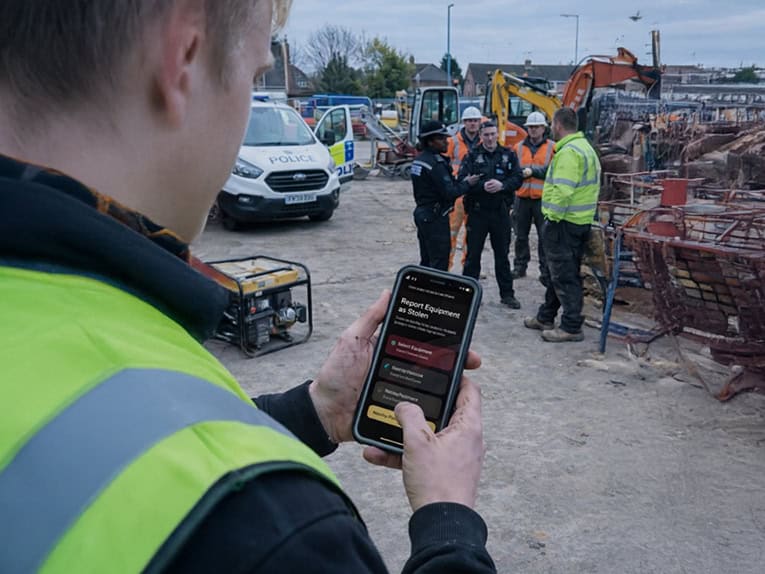
Introducing K | TRAK from KYNEKT
The K | TRAK system developed by KYNEKT introduces modern asset control to the trades sector.
Instead of relying solely on locks and alarms, K | TRAK allows tradespeople to maintain control of their equipment even after it leaves their possession.
The platform combines three core capabilities.
Real time tracking.
Movement monitoring.
Remote disablement.
Together these features transform tools from anonymous items into traceable digital assets connected to the owner through the KYNEKT platform.
Using the mobile app or dashboard, tradespeople can see where their equipment is located and how it is being used.
If equipment is stolen, the owner can take action immediately.
More information about the platform can be found at
https://kynekt.mywebsi.co.uk
How Remote Disablement Stops Theft at Source
The most powerful aspect of remote disablement is the way it removes value from stolen tools.
Criminals steal tools because they can sell them quickly. Tools move easily through second hand markets and online platforms.
When a tool can be remotely disabled, that resale value disappears.
A disabled tool cannot be used effectively. Buyers who discover the tool does not work will avoid purchasing it. Word spreads quickly through resale networks when certain tools are known to be protected.
Remote disablement therefore acts as a deterrent before theft even takes place.
If thieves know certain equipment can be disabled remotely, they are far less likely to target it.

Disrupting the Stolen Tool Resale Market
Most stolen tools follow a predictable path.
A thief sells the tools quickly to an intermediary. That intermediary resells them through marketplaces, social media listings, or informal networks. Within days the tools may appear in another city or even another country.
Because tools rarely carry traceable ownership records, recovering them becomes extremely difficult.
Remote disablement changes this dynamic.
If a tool stops working after being reported stolen, its value collapses. Buyers become suspicious of equipment that fails to operate.
Over time this reduces the profitability of tool theft.
Criminal groups tend to focus on assets that provide reliable returns. Removing that reliability weakens the incentive.
Real Time Tracking Solves Everyday Problems
While remote disablement attracts the most attention, tracking capability delivers everyday benefits.
Construction sites are busy environments where tools move frequently. A laser level may start the morning in one van and end up in another worker’s toolbox.
When equipment goes missing, workers often spend valuable time searching for it.
With K | TRAK enabled, the owner can simply open the KYNEKT platform and view the tool’s location.
Instead of searching an entire job site, the worker knows exactly where to go.
This improves productivity and reduces downtime.
Recovering Tools Lost by Accident
Not every missing tool has been stolen.
Many situations involve simple mistakes. A subcontractor might accidentally place a tool in the wrong van. Another worker might borrow equipment and forget to return it.
In busy environments these situations happen frequently.
Tracking technology allows the owner to locate the tool immediately without disrupting work or blaming colleagues.
This small improvement can save hours across a working week.
Managing Tools Across Vans and Job Sites
Many trade businesses operate across multiple vehicles and locations.
Equipment moves between vans depending on the needs of each job. Keeping track of where tools are located becomes increasingly difficult as a business grows.
K | TRAK provides visibility across the entire equipment network.
Managers can see where tools are located, which vehicle they are associated with, and whether they have moved outside expected areas.
This level of oversight helps businesses maintain accountability for expensive equipment while ensuring workers can find what they need quickly.
Improving Recovery Chances
Remote disablement aims to stop theft before it happens. Tracking technology also improves the chances of recovering stolen equipment.
If a tool moves unexpectedly, the owner can immediately identify its location and report that information to authorities.
Police investigations often struggle because there is little evidence of where stolen tools have gone.
Location data provides valuable information that can support recovery efforts.
The Advantage of Control
Perhaps the most significant benefit of K | TRAK is the sense of control it provides.
Tradespeople often worry about tools left in vans overnight or stored on busy construction sites. The possibility of theft creates constant uncertainty.
Knowing that tools can be tracked and disabled removes much of that uncertainty.
If something goes missing, the owner has immediate visibility into where the tool is and what has happened.
Instead of panic, there is information.

The Future of Tool Security
Construction and trades industries are gradually adopting technologies that improve efficiency and accountability. Digital project management, safety tracking systems, and equipment monitoring platforms are becoming increasingly common.
Tool security is beginning to follow the same path.
Physical security will always remain important, yet digital asset control provides an additional layer of protection that did not exist previously.
As more tools become traceable and remotely controllable, the resale market for stolen equipment becomes less attractive.
When criminals cannot easily sell stolen tools, the incentive to steal them begins to disappear.
Taking Control of Your Tools
Tradespeople rely on their tools to earn a living. Losing those tools can disrupt work, damage reputation, and create unnecessary stress.
The K | TRAK system from KYNEKT introduces a new approach to tool protection by allowing owners to track equipment, monitor movement, and disable tools if they are stolen.
Instead of reacting after theft occurs, tradespeople gain the ability to stop it at the source.
Learn more about the KYNEKT ecosystem at
https://kynekt.mywebsi.co.uk
Or download the mobile app to begin registering and protecting your tools today.
Sources and References
[1] Digital Matter – Remote Vehicle Immobilizer System Explained
https://www.digitalmatter.com/blog/remote-vehicle-immobilizer-system
[2] Direct Line Business – Tool Theft Annual Report
https://www.directlineforbusiness.co.uk/tradesperson-insurance/tradesperson-knowledge-centre/news/tool-theft-direct-line-annual-report
[3] Reuters – Vehicle Tracking and Immobilisation Technologies
https://www.reuters.com/technology
[4] Fix Radio Construction News – Tool Theft Statistics
https://www.fixradio.co.uk/fix-feed/construction-news/post/over-25000-cases-of-tool-theft-reported-to-police-in-2024/
[5] UK Parliament Research Briefing – Equipment Theft Prevention Bill
https://researchbriefings.files.parliament.uk/documents/CBP-9610/CBP-9610.pdf
[6] Kingsbridge Insurance – Tool Theft in the Trades
https://www.kingsbridge.co.uk/blog/trades/trades-life/theft-of-tools-of-trade-bill/
[7] Navixy – Remote Vehicle Immobilisation Best Practices
https://www.navixy.com/blog/safe-remote-vehicle-immobilization-best-practices/
[8] FleetSmart – Using Remote Immobilisers for Fleet Security
https://fleetsmart.co.uk/using-a-remote-immobiliser-for-peace-of-mind/
[9] GPS Protrack – Remote Immobilisation Technology Explained
https://gps-protrack.com/remote-immobilization-how-it-works-and-when-to-use-it/
[10] Gartner – Transportation and Mobility Fleet Management Platforms
https://www.gartner.com/reviews/market/transportation-mobility
[11] Caterpillar – Equipment Security Systems
https://www.cat.com/en_US/support/technology/equipment-management.html