

Most businesses assume their insurer will pay out if tools or equipment are stolen.
Then the claim starts.
And suddenly they are being asked for serial numbers, receipts, photos, purchase dates and detailed evidence of ownership for every item listed.
That is the point many businesses realise their records are nowhere near as organised as they thought.
Insurance Is Not Based on Trust Alone
Insurers need evidence before approving a claim.
That is not them being difficult. It is standard risk control.
They need to verify:
- The asset existed
- You owned it
- It was worth the amount claimed
- It was covered under your policy
Without that, delays and disputes become far more likely.
Why Businesses Struggle With Proof of Ownership
The issue is usually not a lack of documents.
It is a lack of organisation.
Proof is often scattered across:
- Old emails
- Accounting software
- Supplier portals
- Paper invoices
- Staff phones
- Warranty registrations
When something goes wrong, gathering everything becomes a stressful scramble.
Weak Proof Can Hurt Payouts
Poor documentation can lead to:
- Delayed claims processing
- Reduced settlement values
- Rejected line items
- Full claim disputes in severe cases
This is especially problematic for businesses with larger mobile inventories, such as construction companies and plant hire companies, where losses often involve many assets at once.
What Counts as Proof of Ownership?
Strong ownership evidence typically includes:
| Proof Type | Value to Insurer |
|---|---|
| Purchase Receipts | Strong |
| Supplier Invoices | Strong |
| Serial Number Records | Strong |
| Dated Photographs | Moderate to Strong |
| Registration Records | Moderate |
| Warranty Documents | Supporting Evidence |
The more evidence you can provide, the stronger your claim position.[1]
Why Digital Records Make Claims Easier
Businesses using digital inventory systems can usually provide insurer-ready documentation far faster.
Instead of hunting for paperwork, they can export:
- Full asset lists
- Linked proof documents
- Photos
- Serial numbers
- Ownership records
This dramatically reduces admin during stressful claim periods.
How KYNEKT Helps Businesses Prove Ownership
KYNEKT helps businesses centralise and structure proof of ownership records.
Relevant solutions include:
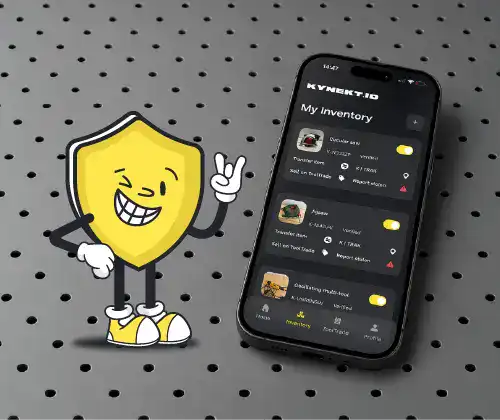
- KYNEKT Inventory App for digital inventory and record storage
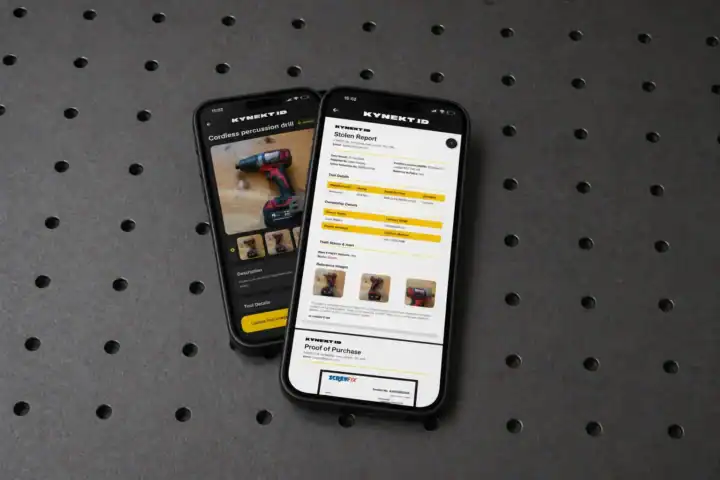
- KYNEKT ID App for ownership registration and verification
- K|TRAK for tracked asset visibility
- KYNEKT Product Suite for complete asset protection workflows
This helps businesses stay insurance-ready at all times.
Frequently Asked Questions
What proof of ownership do insurers need?
Typically receipts, invoices, serial numbers, photographs and supporting documentation.
Can I claim without receipts?
Possibly, but claims are often harder to validate without strong supporting evidence.
Is a digital inventory enough for insurance?
A digital inventory is highly valuable, especially when combined with receipts, serials and photos.
Final Thoughts
Insurance claims become far easier when your proof is ready before the incident.
If gathering ownership evidence today would take hours, your system needs work.
Because when a claim happens, the insurer will ask for proof long before they send payment.
Download the App
Organise your proof of ownership with KYNEKT.
Download the app: https://kynekt.mywebsi.co.uk/download-app/
Sources
[1] https://www.aviva.co.uk/insurance/business-products/business-insurance/claims/
[2] https://www.directlineforbusiness.co.uk/business-insurance/tools-insurance
[3] https://www.abi.org.uk/products-and-issues/topics-and-issues/claims/
[4] https://www.gov.uk/report-tool-or-equipment-theft
[5] https://www.simplybusiness.co.uk/knowledge/articles/business-insurance-claims-guide/
[6] https://www.hiscox.co.uk/business-insurance/claims